Friday, May 15, 2009

Why Are Peppers Hot?

Hot on the trail of an answer to that burning question is botanist and researcher Joshua Tewksbury of the University of Washington. He's researching down in the jungles of Bolivia. An article about his research is in the April 2009 edition of Smithsonian Magazine. Researchers have known for years that birds are not bothered by capsicums, the active ingredient that puts the hot in hot peppers. That is actually beneficial to the peppers because the pepper seeds then pass through the birds to seed new plants. For some time researchers have also known that seed crunchers, like rodents, are deterred by hot peppers. That's obviously beneficial to the pepper plant as well, because a broken see will not germinate. But Tewksbury thought there was more to the story.

Why, for instance, could he find mild and spicy peppers of the same variety growing in the wild in close proximity to each other? His answer: fungus. A genius of the Fusarium fungus is specific to peppers. In the wild the higher the concentration of capsicum in the peppers, the lower the rate of fungal infection in the pepper plant. And mild peppers often carried heavy loads of the fungus.

The tendency toward high concentrations of capsicum is long lived in the gene pool of the peppers that develop it, which is why healthy plants still produce hot peppers. Then centuries ago spice loving humans came along and selected certain peppers for their heat index to pep up their food, perpetuating those hot genes.
Because of some antifungal properties in hot peppers, many cultures have used peppers to preserve food over the centuries.

Chemist Wilber Scoville invented the scale to measure the "heat" in peppers in 1912. The SCU or Scoville Heat Unit measures how hot a pepper is:

Bell Peppers - 0
Poblano - 1,000 - 2,500
JalapeƱo - 2,500 - 8,000
Serrano - 7,000 - 25,000
Cayenne - 50,000
Chiltepins - 70,000
Habanero - 200,000 - 300,000
Scotch Bonnet - 200,000 - 300,000
Naga Jolokia - 855,000 - 1,041,427


Organic Pest Control

There are good bugs and there are bad bugs. We all know that. And in nature they're pretty evenly matched. Each is attracted to it's own kind of shelter, food, and nursery materials in the wild. The good and the bad tend to keep each other's population in check. Most gardens, though, are not much like nature. In nature plants are intermingled and mixed. In a garden we often have long rows or square plots of monoculture. So once a bad bug gets into a monoculture it thrives there. Then there are not enough good bugs to help keep them in check. When a gardener sprays to kill bad bugs, she'll kill the good bugs too. And it is axiomatic in organic circles that the bad bugs always rebound faster from a dose of chemicals than the good bugs do, usually making the problem much worse, not better. However, there are several organic techniques to help encourage good bugs and discourage bad one by keeping your garden in a natural balance:

Select Pest Hardy Plants--cultivars of corn that have good thick husks are seldom much bothered by corn earworms. And purple cabbage is seldom troubled by imported cabbageworms. Many varieties of tomatoes and other vegetables are bred for natural resistance to disease.

Concealing or Masking the crop from pests--light weight, translucent row covers are a good way to prevent many pests from getting into your young crops while still allowing sunlight, water, and air to circulate. This technique is particularly good for the young, tender salad crops--lettuces, cabbages, spinach, kale.

Producing odors that repel or confuse a bug--scientific experiments have demonstrated that many of the night-flying moths, including the one that delivers those vicious cut worms to your garden, track odors upwind to the plants they lay their eggs on. Marigolds (most nursery marigolds are unscented so look for Tagetes patula or Tagetes erecta -- if anybody runs across these spp. locally, let me know) mints, and sweet basil interplanted with flowers and vegetables helps to "mask" or repel unwanted pests.

Use a "Trap Crop" to lure unwanted insects away from your garden--growing collards well away from cabbage will help protect against diamondback moth larvae. Plant petunias well away from your roses to trap Japanese Beetles. And be sure to remove and replace any infested "trap" crops to keep the pests from multiplying and spreading to your more desirable plants.

Provide food for beneficial insects as they search for pests--beneficial insects tend to have short mouth parts. So small, open faced flowers will provide easy to reach pollen and nectar to give your little garden friends the strength to go after the pests. Dill, fennel, anise, and coriander (all members of the carrot family) produce small flowers suitable for beneficial insects. Longer blooming sunflowers, zinnias, and asters also attract and feed them. Other plants attractive to beneficial are yarrows, angelica, chamomile, candytufts, morning glory, baby blue eyes, evening primrose and goldenrod. You'll notice that many of these plantings are basic to a butterfly garden.

Companion Planting--There are some winning combinations for companion planting:
  • Basil and onions with tomatoes to control tomato hornworms.
  • Thyme or tomatoes with cabbage to take care of flea beetles, cabbage maggots, and white cabbage butterflies
  • Catnip with eggplant to deter flea beetles
  • Set Onions in rows with carrots to control rust flies and nematodes.
  • Horseradish with potatoes to repel the Colorado potato beetle
  • Add radishes or nasturtiums near your cucumber plants to control cucumber beetle
  • Interplant borage among your tomatoes, cucumbers, and strawberries to both repel some pests and attract many good ones
  • Cilantro among the spinach will repel aphids and attract the very beneficial tachinid flies
  • Summer Savory with your beans will repel bean beetles
  • grow tomatoes, parsley, or basil with your asparagus to help keep a check on asparagus beetles
  • and if you can, leave the paper wasps nests and spider webs alone. They are ferocious hunters.
Also, sphagnum moss has fairly powerful antifungal properties. Top dressing around your new plants is said to help prevent some fungus diseases from getting started in seedlings.

And don't forget the beneficial animals --Toads for instance, eat 3,000 grubs, slugs, cutworms, flies, wood lice, grasshoppers and beetles a month (make a toad house by placing an old clay pot upside down in a cool, moist, out-of-the-way place in your garden. Break out a door for Mr. Toad, about the size of a 50 cent piece, at the rim where the pot touches the earth). An added benefit of toads is they won't turn on your flowers and vegetables if there are no insects to eat. Most pests are actually night workers, so a single bat will eat 1,000 bugs a night, a family of bats thousands. If you're near some open spaces,consider erecting a purple martin house, each martin eats 1,000 insects in 12 hours. A single wren can gobble down 500 insect eggs, beetles and grubs an afternoon. 60% of a chickadees diet during the winter is comprised of aphid eggs.

All good reasons to make your yard as bird and animal friendly as possible.

Gardening for the Mobility Impaired


I never tell people when they need joint replacement, says my ortho doc.They'll tell me when it time because they can't stand the pain anymore.
Can you get me through one more summer?
No.
Bummer.


So I'm scheduled to get two new knees right as Spring gardening gets underway, double bummer. Recover will be long and the rehab grueling, I'm told. And I'm definitely not going to get down on my knees to dig in the dirt this Spring--so no fresh tomatoes on my vines, no snappy homegrown peppers, no spicy salad greens from my little ol' pea patch, not this year--that's a thought more depressing than the surgery.

Then my wife Gayle had an idea. What if she unloaded the junk from some plastic storage shelving in the garage and set the shelves up on the back deck? We could buy some containers to put on top of the shelves and I'll be able to sit in a chair to tend my cukes at table level after the surgery. Because I'd been eying the magazine ads for the Grow Box from Garden Patch anyway, that's what we ordered.

The Grow Box has several advantages for the mobility impaired (or for those with limited space, like a balcony): these planters are large and deep; they are self watering, so I won't have to maneuver down the stairs to drag the hose up onto the deck to water them every day or so; and they have a plastic mulch cover that not only helps warm the soil but also limits the weeding I'll have to do. They're a bit pricey, but we ordered six.

Now I've got my kitchen garden at table height where I won't have to get down on my knees to plant and tend vegetables. And because the water reservoir is large, holding a couple of gallons, watering is infrequent and can wait until Gayle is home to help. I dropped some mosquito dunks (Bacillus thuringiensis) into each water tank to control the little pests. Now, between physical therapy sessions, I can tend my veggies without the risk of tearing stitches or of falling on stairs.

Unwanted grass in ornamental grasses / perennial beds

Toward the end of last summer I was plagued by unwanted grass growing up through ornamental grasses. It was in some of my perennial bedding plants, too. This grass--tall, narrow leafed, fast growing--wasn't just growing near my other plants, it was growing up inside them, so that pulling out the unwanted grass meant pulling out the ornamental as well. During winter clean-up I cut the grasses and border perennials back to the crown after they'd died off. And so this spring, when I noticed the unwanted grass greening out long before anything else, I decided to do something to get rid of it.

But what to do? I stewed about it a couple of days and decided, despite my organic leanings, I'd need to use a contact herbicide like Round-Up. But how to apply it without killing the "good" plants? I put a waterproof dish glove on one hand and then pulled an old cotton sock over the glove. I wetted the sock--the palm and fingers of the glove--with herbicide and then ran my gloved hand over the long grass, from stem to leaf, grasping it like I was going to pull it out and coating the leaves with the chemical. Because the herbicide was applied only to the grass leaves and didn't touch the "good" plants, it worked like a charm. This week the good plants are budding out, free of that unsightly grass.

Gardening Tip

Pray for miracles, but plant cabbages.
-- author Ken Follett in his novel Pillars of the Earth

Tuesday, October 7, 2008

Friday, September 26, 2008

Financial Services Disaster

Please call the current Financial Services disaster by it's proper name: a gigantic continuing criminal enterprise, a national Ponzi scheme, an international fraud. Ironically this crime was worked against every citizen who invests in the new "Ownership Society," yet, as in all good confidence crimes, this crime was also perpetrated with the help of the "mark."

This crime was perpetrated by Wall Street, enabled by payola--sorry, political contributions--and favors lavished on Capital Hill and in the White House. Blame extends to all members of both political parties in Congress.

Regulators at the Fed and at Treasury acted as Wall Street Mafia Lieutenants, turning a conveniently blind regulatory eye to the building credit tsunami as they rotated in and out of "public service," offering their expertise in new-style Wall Street markets and financial instruments that mere career civil servants, we were told, who were too stupid to understand.

This criminal enterprise extended its tentacles from Wall Street to Main Street using mortgage brokers and real estate appraisers as pimps and bag men, playing not only on the ignorance but also the unrealistic hopes and aspirations of the credit junkies they'd hooked.

Even if the average citizen didn't get a shady mortgage himself, most of us participated in the fraud by riding the rocket of ever increasing--and increasingly unrealistic--returns through our desperate attempts to insure our retirement investments against a murky future in the new Ownership Society.

Thank God we didn't let Wall Street get its hands on Social Security; a lot more people are going to need it now.

This nation was foolish to invest in an opaque, faith-based, financial regulatory system. We were foolish to allow Wall Street thieves to--at last!--create a way to tap into the equity in our homes in exchange for cheap plastic crap from China. And in November we will all be exceedingly foolish to re-elect anyone now in office.

Still, just wait until you see the looming credit card panic, coming soon to a government near you.

Friday, September 12, 2008

Yet Another Intellectual Flyweight


Let's see, 43 presidents. 9 accidental presidents. That's a 20.93% chance Palin & her spoon fed, failed Bush-era ideas not to mention their shared lack of international situational awareness will become president if we elect McCain.

Oh and, 5 colleges in 6 years to get a journalism degree?--I thought she hated the press anyway. Flyweight.


That's all we need in the white house another jokey, quipping, reactionary who is also a science denying, intellectual flyweight.

Nice parody though:

Monday, July 28, 2008

This Will Make Your Blood Boil


You may have heard there's no such thing as a free lunch, but David Cay Johnston says there is — and wealthy Americans do get richer because of it. In an April 14, 2008 speech at the Commonwealth Club of California, Johnston, a Pulitzer Prize-winning reporter and author of "Free Lunch," outlines how government-private sector collusion affects the middle class and the poor.

http://wordforword.publicradio.org/programs/2008/07/25/

This is more than a Conservative/Progressive/Libertarian politics question, but something that cuts to the fabric of who we are in the United States. All Johnston's information is from public sources, mostly government documents.

Friday, July 25, 2008

Fight of the American Economic Airline

Let's see, 7,000 mortgage foreclosures per day in the US, but it is a "moral hazard" if we were to bail out a common taxpayer; after all he may have been speculating, or should have been smarter, or should have read more carefully, or just isn't rich enough to care about in Washington.

But yesterday Congress and the President bails out Fannie Mae and Freddie Mac (and Bear Stearns before them), all reckless gamblers in the global casino, yet there is no corresponding "moral hazard." Our federal keepers couldn't even manage to extract a jot of blood, much less a pound of flesh in the bargain. No 5% of future profits into the treasury for taxpayers covering Fannie and Freddie's bad bets, foir instance. Congress didn't even have the cojones to unseat the best paid corporate executives in the world as a price for their bad bets at the money tables.

This is nothing more than socialized risk for corporations and free market pain for the taxpayer.

On this flight of the American Economic Airline, those who have bought their way into the government's First Class section get the Golden Parachutes, while the taxpayers in the back of the plane just have to ride this crippled flight down.

Thursday, June 26, 2008

Wise County Plant Permitted


I've been away a few days, over in Wise County, Virginia, at the far western tip of the state. I was testifying before the Air Quality Board against the proposed Wise county coal-fired plant, know officially as the Virginia Cities Hybrid Energy Center--makes it sound like a Prius, doesn't it?

Tough trip for a 3-minute gig--9 hours each way--but statewide representation was called for and TWCAN and our eco allies have been battling this plant for a couple of years now. There was a good showing; we mustered about 110 people from all over the state, not bad for a hearing spanning a couple of weekdays out in the middle of nowhere (largest gathering of Toyota Prius' (Prii?) I've ever seen: 15).

Unfortunately, I just read in the news this morning that the Air Board approved the permits last night. Still this was a qualified "win" for us as opponents forced several amendments. Dominion Power will now cut allowable Mercury output from ~10 lbs per year to 4 lbs and Sulfur Dioxide from 2,400 tons per year to 600. We did not convince the Air Board they had a duty to regulate Carbon Dioxide, despite the recent Supreme Court ruling. That was disappointing. By the way, Dominion could still do better on Mercury emissions. There is a Pennsylvania plant that has Mercury down to 1 pound per year. Since every fresh water body in the Commonwealth of Virginia has a warning about consuming fish because of Mercury contamination from coal-fired plants, the Air Board should have gone for the 1 lb standard.

Also as part of the deal, Dominion is going to convert two nearby coal-fired plants--built in the 50's and real polluters--to natural gas, which reduces the state's overall pollutants profile considerably, and was the rationale for allowing the 4 lbs of Mercury. But that was really a case of making necessity a virtue, since Dominion would soon come under considerable pressure to do something about the pollutants from those ancient plants in any event.

From the beginning this plant was designed as a fairly innovative circulating fluid bed "hybrid" plant that could burn waste wood and piles of coal left all over the ground from previous mining operations in the region. That left over coal is called "gob piles" by the locals. Runoff from gob piles has been polluting streams and rivers in Virginia for decades. There was a amendment added to the permits to prohibit the cutting of standing timber for fuel, only waste products.

The downside of this ruling:

* there's still no such thing as "clean coal," and mercury and acid gases--CO2 and SO4--are still being emitted,

* there is no requirement to actually collect and burn the gob piles,

* the plant is required to burn Virginia coal, which means more mountain top removal mining--which is really heartbreaking to see,

* while this plant might meet all existing state and federal regulations, if national politics continue as forecast there will be a substantial change in clean air regulations after the November elections, probably making this plant obsolete before it is built,

* no compromises were made on increasing statewide energy efficiency. According to the DOE EIA the average Virginian still uses twice as much energy (per capita, less transportation) as the average Californian, yet California has the world's 7th largest economy,

* at $2 billion this plant is no bargain for Dominion ratepayers as a guaranteed 14% increase in rates is built into the legislation. Not included in the future costs are adding carbon capture and sequestration capabilities as they become available--if they ever becomes available. (and if it will even work here. It is still not proven that abandoned coal seams are sufficiently air tight hold the carbon).

* Plus we should add in the costs of disease from the pollutants, lost work time and productivity due to those diseases, and lost revenue from eco-tourism, not to mention the costs of more CO2 emissions, if Congress implements some sort of Carbon cap and trade system.

Water quality is a real mixed bag in this deal. Dominion is reducing treatment of returned water by boiling most of it off in the operation. But the water will still comes from the scenic and environmentally sensitive Clinch River--home of many lucrative eco-tourism businesses. The Clinch River is also the source of water for the nearby Cabo coal-fired plant, which will lower water levels even more during dry season.

I'm still digesting it all. On the one hand, not a bad showing in the heart of coal country, I suppose. But on the other, you have to wonder about the folks of that region who showed up supporting this plant.

For 100 years coal has promised to pave their streets with gold, yet they're still the most economically depressed, polluted and diseased area of the state with the state's highest per capita suicide rate, alcoholism rate, lung disease rate, and exodus rate. In the end, Virgina missed an opportunity to bury coal as a source of power.

Already nationwide 80 coal-fired plants have been taken off of the books n favor of alternative energy and energy efficiency. Even the Department of Energy has abandoned its efforts at to build a super efficient coal fired plant as unworkable. There is no such thing as Clean Coal.

Friday, June 20, 2008

The Great Oil Stampede of 2008

So much smoke all of a sudden and so little fire, not just drifting out of the Great Dismal Swamp, but belching from the proponents of offshore oil and gas drilling. I've watched for a couple of weeks now as conservationists, democrats, liberals, foreigners and just about everybody else except the real culprits were dragged through mud in the press as being the cause of our sky high gasoline prices. There are a lot of reasons why they're wrong.

First of all gasoline is expensive because we allowed our economy to be driven into the ditch, and the value of the dollar has fallen on the world market. If we were buying gasoline with Euros, gas would be the equivalent of about $2.50 US per gallon. A weak dollar makes all foreign purchases more expensive.

Second, despite what Newt Gingrich and his cohort has been busy preaching on every talk show on TV and radio, there is no ban on offshore drilling to lift. Oil companies can still drill on the offshore leases they own, and they own a lot. There is only a ban on new offshore leases. According to evidence obtained through congressional oversight hearings (the first such hearings on energy of this president's two terms), as reported by Oregon Congressman Peter DeFazio, inside the continental US offshore waters there are "44 million acres off the coast leased, 10.5 million acres of that has been developed, but the other 33.5 million acres are available for offshore drilling." According to the United States Department of Minerals Management Services, 80% of the potential offshore oil is available to be developed through existing leases, but has not been pumped by the lease holder. From the report of hearings before the congressional Committee on Natural Resources, "Between 1999 and 2007, the number of drilling permits issued for development of public lands increased by more than 361%, yet gasoline prices have also risen dramatically contradicting the argument that more drilling means lower gasoline prices. There is simply no correlation between the two."

Further, back in the 90's former President Clinton leased what used to be known as the Naval Petroleum Reserve, now known as the National Petroleum Reserve of Alaska, to the oil companies, a field which contains a known 13.4 billion barrels of oil & is the largest reserve on the continent. Since the Clinton presidency, the lease holders have drilled 25 wells and capped them all. Because oil has gone from some $20 per barrel to it's current $135 mark since those leases were let, the Oil and Gas companies have increased the value of their underground stores without pumping a single barrel from under federal lands. In short, they're sitting on their investment and watching it grow in value. Why should they pump more oil to lower the price when we're willing to pay four to five dollars per gallon?

Finally, none of the sturm und drang over offshore oil leases really matters much when the United State's oil reserve numbers are compared to the world market, which produces (and consumes) 300 billion barrels of oil per year. According to the Department of Energy's Energy Information Administration the technically recoverable oil in the lower 48 states amounts to 40.92 billion barrels of oil, a drop in the bucket. Of that, only 18.17 billion barrels of oil are "unavailable for leasing or development." Compared to the worldwide oil production, the much disputed ANWR (Arctic National Wildlife Refuge) fields contain about 17 days of world oil usage. All told, US estimated oil reserves (Alaska plus the oil in and offshore of the lower 48 states) are 221 billion barrels--period. That's less than one year's worldwide production of oil or, if dedicated to the US market alone, 1000 days of US usage.

In short, we pumped America dry first and that hurts us now. But here's the real pain: within the lifetime of the graduating class of 2008, China alone--at it's current rate of growth--will demand about 300 billion barrels of oil per year, the today's total production. So we're at an energy crossroads in the United States.

We can either doom our children and grandchildren to endless wars over a depleting resource like oil, or we can put this nation's talents and considerable might behind greater energy efficiency and developing alternative energy options to fuel this great nation. This is a patriotic duty we owe our country and a parental duty owe our kids. Take up the challenge of developing alternative energy today.

Saturday, May 3, 2008

Green is Dead, Long Live Blue

Podcasts Worth Hearing

From the Commonwealth Club of California, Inforum series.

Adam Werbach, was the youngest and first paid director of the Sierra Club. Four years ago he, along with Michael Shellenberger and Ted Norhaus, all well known environmentalists, rocked their world by delivering their eulogy for the movement called Is Environmentalism Dead? Read Here.

Today, after enduring years of being reviled as a environmental traitor and for working with companies such as Wal-Mart, Adam is back receiving the Inforum award for 21st Century Leaders Listen Here (real player file).


Friday, March 14, 2008

The Three Trillion Dollar War: The True Cost of the Iraq Conflict


The title about says it all. Winner of the 2001 Nobel Prize in Economics, Joseph E. Stiglitz of Columbia University is the author of Making Globalization Work and Globalization and Its Discontents. Linda J. Bilmes, a professor of public finance at Harvard's Kennedy School of Government, is a former assistant secretary for management and budget in the U.S. Department of Commerce tally the true cost of this war and how it's been hidden from the American public.

In this interview Bilmes does an excellent job in detailing exactly how much this war has--and will--cost U.S. Taxpayers and details the inner workings of the federal financial systems and the efforts of the administration (and Congress) to keep the true cost of the war from being totaled.

Most devastating is the inability of wounded troops to qualify for and receive promised health care, a national disgrace, because of bureaucratic infighting and lack of budget.

A particularly good interview with Linda Blimes by WHYY's Marty Moss-Coane on Radio Times:
listen to podcast here (right click the link to download this mp3 to your computer).

Monday, March 10, 2008

Natural Pest Control

A natural pepper spray to deter animals and, it is reported, two-spotted spider mites and other insects.

  1. puree two chile peppers (the hotter, the better) & some water in a blender
  2. strain out solids
  3. add water to make 1 gallon
Mix 1/4 cup of concentrate per gallon of fresh water in a sprayer. Add one tablespoon of liquid soap to help spray stick to your plants.

From Organic Gardening magazine, 2007, v. 54, No. 6

Friday, March 7, 2008

The Virtues of Native Plants

Podcasts Worth Hearing

I heard Dr. Douglas Tallamy speak at this month's meeting of the Butterfly Society, held at the Norfolk Botanical Center, and found his message and his presentation quite compelling. In fact, Doug has changed my entire emphasis in gardening: only native plants from this day forward. Even a single home garden here on the East Coast Flyway can make a really big difference for both birds and butterflys.

I have since found a WHYY Radio Times interview with Dr. Tallamy available as an mp3 download (right click and save to your desktop or mp3 player Listen Here ).

I also bought an autographed copy of his book Bringing Nature Home, how Native Plants Sustain Wildlife in Our Gardens, which is fascinating.


Dr. Tallamy is currently Professor and Chair of the Department of Entomology and Wildlife Ecology at the University of Delaware in Newark, Delaware, where he has written more than 65 research articles and has taught insect taxonomy, behavioral ecology, and other subjects. Chief among his research goals is to better understand the many ways insects interact with plants and how such interactions determine the diversity of animal communities.


Thursday, February 28, 2008

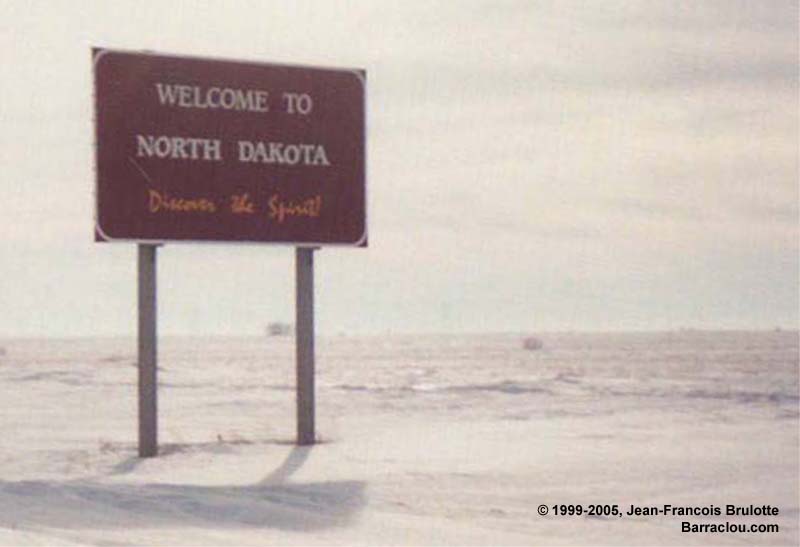
What cost North Dakota, Mr. Editor?


Even here in the northern reaches of Margaritaville, the incessant whining from North Dakota has broken through a pause in Jimmy Buffet tunz, prompting me to write, although I am sure by doing so I risk a visitation from a flotilla of well tanned hayseed hitmen (undoubtedly RVing home for spring planting after a relaxing, sun drenched winter in Florida) or, worse, that Truth Squad you've launched to spread the good new about your state ("North Dakota: Not As Bad as You've Heard," perhaps?).

As I understand it, North Dakota is in an uproar concerning the editorial slant of an article in National Geographic magazine, which focused on the net out-flow of your most precious commodity--your children. First of all, know that I am a distant ancestral cousin of yours, familiar with both the plaint and the plight of North Dakota families because I grew up on the high plains of Texas, in Lubbock, where cotton is King and kids also go off to school and never come back. Growing up I never thought I'd live anywhere else but Lubbock; then, I joined the military and quickly swore I'd live anywhere else but sad ol', dusty, Lubbock for the rest of my life. Spurred in my flight by Mac Davis' tune, "Happiness is Lubbock in your Rearview Mirror," I know how your young people feel because I've felt their frostbite, to paraphrase a former president of the United States. (The plight of the plains reminds me of that old WWI song, "How You Gonna Keep Them Down on the Farm Once They've Seen Gay Paree?")

After my wife --another Lubbockite--and I escaped the high plains, we lived around this big ol', glorious, technocolored world, boating with the Navy, our happiness weighed down only by decades of impassioned entreaties from our parents begging us to come back to the dusty plains to live; to farm; to suffer through bleak, desolate winters; to spend sleepless nights moving and setting irrigation pipe in the fields; to suffer the bite of the northern hawk on treeless vistas; to endure blinding dust storms and terrible allergies; to worry through withering droughts in cloudless summers; to suffer the oppressive and small-minded political and religious atmosphere; to raise children in that same stifling and, at times, backward terrarium we escaped all those decades ago. We resisted our parents' pleas for nearly 30 years and, now that their leaf has blown from the cotton stem, I am quite happy to report that we will likely never see the high plains again, except perhaps between beverage services through our window from first class. (Q: What to you call a family reunion in Lubbock? A: a funeral. Feel free to substitute Bismark for Lubbock, it probably works.) But that is a personal tale. Here is my real question for you, Mr. Editor, and the reason I write.

What cost North Dakota to the rest of the nation? What do the rest of us pay for you to enjoy you splendid isolation and cherished unbroken vistas?

In John Sperling's book, The Great Divide, Retro vs. Metro America, he demonstrates that during the decade 1991-2001 North Dakota was a net federal welfare state (federal inputs from all sources less federal taxes paid) to the tune of $21.9 billion dollars. That is an average $102,216 federal subsidy per North Dakota family of 3 over that decade (yeah, we suspect where it all went too; you folks need to look into what happened to that money we sent you). Further, nationwide the agriculture industry represents just 0.8% of US gross domestic product, employing just 3.2% of the nation's labor force, yet receives $20 billion dollars per year in federal subsidies; an average of $3,775 per worker.

So instead of carping about a magazine article, it is time North Dakota residents imagine how empty North Dakota would be if it had to stand on it's own two financial feet in this government, pull their own weight in the Union, and then perhaps you'd make more of an effort to be thankful for the sons and daughters of North Dakota who've left your welfare state to join the net productive parts of our nation, ensuring our continued financial support of your North Dakotan dream. Maybe thinking of it as an arranged marriage would ease your pain. You're not losing a daughter but ensuring your meal ticket on the free lunch express.

Sure, North Dakota produces some things that the other parts of the nation need--as do many other parts of the world, all items we can--and do--screw a spigot into the side of your state and drain off without too much expense or trouble to ourselves--wheat, oil, electricity, coal, your children. Cut us off, and we'll just buy wheat from Canada or New Zealand. Coal? It's everywhere. Talented kids? "Hello, Bangalore!" they're everywhere. So tell me again, why do US taxpayers pay so many people to live in North Dakota at all? Isn't the nation paying too much for what North Dakota provides? Will North Dakota ever pull it's own weight in the federal tax system? History is not on your side.

The relentless march of progress is also against your state, sir. I have read that, with modern GPS navigation and computer technology, a couple of teenagers on a combine can now harvest five thousand acres of wheat! Imagine that. But in the future I foresee a fleet of computer-controlled combines monitored from consoles in Bangalore, India, likely doing the same work via satellite control for pennies an acre. On-site manpower will only be needed in North Dakota for fueling, maintaining and highway transportation of the Chinese-made equipment from field to field, work undoubtedly supplied by itinerant drivers in the US on work visas from south of the border. We could probably robotize the over-the-road transport too, if you'd get your pickups out of the way. In the future, what need will the nation have of a sizable permanent population in North Dakota? A capital of North Dakota at all?

Same goes for your oil and other extractive industries. A few hundred roughnecks a year will pass through your oil patch instead of trekking to Canada or Alaska, sinking pipe and setting up the computer controlled pumping stations to get the product to the places where the nation's work is done. Don't need many people to watch the dials as that black gold flows toward the coast. But isn't that the inevitable end result of the relentless march of progress and most likely future North Dakotans are raising and educating their children to return to? Is that really what you want for your children? Even in this newspaper there is evidence of your state's decline as well-paying, high tech jobs are--apparently--not enough to lure talented, educated and thinking people to the frozen back of beyond, since those jobs go begging week after week. Yet you Northern Dakotans cling like the South to your own Lost Cause.

So what is the upshot?

I tend to think about North Dakota, when I think of it at all--indeed when I think of any of the plains states (all of your neighboring states are, by the way, net federal welfare states as well)--the same way I think about the National Park system. I pay a lot in taxes for those parks, but I seldom if ever visit them. Yet I don't begrudge them their keep, and I do find some comfort and pleasure in just knowing that they exist--like I enjoy knowing that the last herd of buffalo or pack of gray wolves or band of Lakotas exists--even though I'll probably never see them outside the pages of National Geographic. So it is with North Dakota and the rest of the cultural desert we call the fly-over states--they're nothing more to me than a still life of a world that maybe used to be, a tableau of the myth of the family farmer, at best a fading Polaroid reminding us how far we children of the plains have come. So, as a child of the plains, I can tell you that we're not going back and we're not coming back either.

So, good on you for choosing to live in North Dakota, for proving your mettle and stamina against the frigid elements, and for living the rugged, and isolated lives you've chosen to live. Just don't expect the rest of the nation, those of us who pay for your way of life in part or in whole, to get too wound up about your state's out-migration problems. The more who leave North Dakota and the sooner they do it, the better for the positive GDP producing parts of the nation. But in the meantime, just keep those commodities coming--both kid and wheat--and we'll help with a handout when we can.

--

Rick Kennerly
Virginia Beach, VA
http://www.mouseherder.blogspot.com/
http://www.mouseherder.com

Friday, November 2, 2007

Putting Conserve back into Conservative

When did conserve fall out of the Conservative movement? It's a serious question for Virginians on both sides of the political divide today. Amid the dust ups about climate change and among all the tears shed for drowning polar bears, Conservatives have overlooked the underlying issue of Virginia's runaway, cash and resource wasting energy consumption. No successful businessman would add a vehicle to his fleet or a person to his staff without first being absolutely certain that he had wrung every ounce of efficiency out of his operation. Yet as a state we pay and pay some more to increase energy supplies without addressing our underlying inefficient energy usage. Energy inefficiency is not good business and it's not sound fiscal policy for the Commonwealth.

Companies as large and as diverse as General Electric, Bank of America and 3M as well as future oriented utilities like Florida Power and Light, BC Hydro and Pacific Gas and Electric have all put considerable study into America's energy future and are taking steps to insulate their companies from the coming worldwide energy crisis and inevitable rate hikes as well as rapidly repositioning their product lines and portfolios to take advantage of the New Industrial Revolution (NIR) in energy efficient generation spreading across the nation (Alliance to Save Energy- www.ase.org ). One gauge of the strength of the coming NIR is venture capital investment in Renewable Energy, steady at around $250 million per year for the last several years, suddenly blossomed to $1.5 Billion in the first six months of 2007 alone (Newsweek, 08 Oct 07). Yet Virginia's energy future stands firmly rooted in the dirty past.

In 2006 the American Council for Energy Efficient Economy ( www.aceee.org ) issued it's annual report rating the 50 states in six categories, from Utility Spending on Energy Efficiency to Building Codes to State Leading by Example. The maximum score of 44 points was earned by Vermont while the Commonwealth of Virginia scored a measly 6 points, mostly on the strength of our building codes. Fortunately for the Commonwealth, enforcement of those building codes was not rated or we would have probably fallen even further in the rankings. In the end, Virginia finished 41st in ACEEE's assessment, much lower than it appears because of the numerous two- and three-way ties above us in the rankings.

What Virginians need now is some creative thinking in Richmond about energy efficiency. Our legislature could look to Austin (TX) Energy for inspiration. Back in the early part of this century Austin Energy bought a 3-acre property and set it aside for a future coal-fired electrical plant. Today, that property has yet to be developed as a generation plant. Austin Energy, instead, opted to increase demand-side efficiency first by offering free energy audits to homes and small businesses as well as offering financing assistance and guarantees for energy efficient improvements. In the end Austin saved 600 MW of electricity through increases in energy efficiency alone and avoided building a 500 MW coal-fired generator. The cost of the new efficiency program? The citizens of Austin saved about one half the cost of the proposed billion dollar plus generation plant, and energy efficiency savings keep paying month after month after month.

In Virginia the stumbling block to utility-based efficiency programs is the way that Commonwealth utilities make money. Here, utilities only make money by selling electricity (supply-side), so there is no financial incentive for programs to reduce demand-side waste nor to limit supply-side growth. This is where proper conservative thinking in Richmond can help. We have not suffered an energy crisis in the Commonweath in modern times, but we should learn from those who have. Consider California, seventh largest economy in the world.

Like many people I got a good chuckle as California worked it's way through several energy problems over the last few decades, but California emerged with an energy system more efficient, more supply diverse, and considerably more future proof than that of complacent Virginia. In fact, because they are more efficient, the average Californian consumes only one half the energy the average Virginian does (on an annualized, per capita basis, in millions of BTUs from all sources of energy, less transportation--so as to compare residential and business use alone, Energy Information Agency - www.eia.doe.gov). As I write this, California is now on track to increase energy efficiency 1% per year over 30 years. They're halfway there. That's the equivalent of a major oil field discovered under the state, an oil field that is never depleted.

Nor does Virginia's government lead by example, as highlighted in the ACEEE ratings. Governor Kaine's 2007 Virginia Energy Plan is largely aspirational (aspirational goals having replaced Blue Ribbon Commissions in politics as the political fig leaf of choice for lack of vision and legislative inaction). The energy re-regulation bill now coming out of Richmond is largely written to favor one supply-side intensive industry. Our state legislature will not even commit to a modest Renewable Energy Portfolio Standard or enforceable Energy Efficiency standards for Virginia (again, offering only aspirational goals), even though there is a 20% payback on energy efficiency investments. My own city of Virginia Beach, is equally guilty. With 200 other cities Virginia Beach signed the Cool City Initiative, but as far as I can discover has made pitifully little progress toward energy independence nor energy efficiency for the city. Our elected leadership may not get it, but leaders in other jurisdictions do.

In Blountville, TN, for instance, the Sullivan County School District engaged in a performance contracting project to improve energy efficiency in their schools (projects from daylighting, to geothermal heating and cooling to just shutting off computers overnight--which saved the district $35-40k/year alone). No new taxes were raised for the project, the schools received millions in energy efficient upgrades and the district is saving $1 million dollars per year in energy expenditures, cash which they then put back into the classroom. Sumner Country, TN, installed geothermal heating and air conditioning in their schools and now have an extra $5k per month in cash flow to invest in education. The state of Kentucky saves $3 million per year in replacement and manpower costs by replacing every traffic signal with long lived LEDs signals ( www.kilowattours.org ). Even the most mundane application can be improved. It is estimated (FacilityManagement.com) that all the EXIT signs in the nation burn about 35 billion KWH per year. If those were replaced with more efficient LED models, it would save about 90% of the energy, the equivalent of 5 nuclear power plants.

So before Virginia agrees to yet another expensive, mountain destroying, air and water polluting, $1.5 billion coal-fired generation plant in Wise county, before we open a new power line corridor to the Ohio Valley to get yet more energy from some of the oldest, most inefficient coal-fired plants in the nation, join me on insisting that our representatives in Richmond ensure the Commonwealth is operating as efficiently as possible. Join me in putting the conserve back into Conservative.

Wednesday, October 17, 2007

Solar Decathlon

Every other year, twenty universities from around the world compete in the solar decathlon in (surprise!) 10 categories

  • Architecture
  • Engineering
  • Market Viability
  • Communications
  • Comfort Zone
  • Appliances
  • Hot Water
  • Lighting
  • Energy Balance and
  • Getting Around

the homes are limited to 800 sq. ft., for transport by truck or shipping container and, while designed for grid-tied electricity, are built off-grid on the Mall.

I've created a couple of video tours:

Introduction (win 2:12)
House by House (win 23:45)

Introduction (apple 2:12)
House by House (apple 23:45)


If you have a slow connection, right click the link, select "Save Target As", and play from the downloaded file later.
--

Friday, September 28, 2007

Dump the Junk, Save a Tree

The average American receives 41 pounds of unsolicited mail each year, mostly junk mail. It's not just annoying but bad for the ecosystem. That 41 pounds per year represents:
  • more energy in production, delivery and landfill costs than 2.8 million cars do.
  • requires 100 million trees to supply the paper
  • bulk up landfills (44% of the junk is never even opened)
  • wastes your time sorting and recycling
  • costs you a lot of money, if you buy something you don't need.
You can help stop most of it from ever finding its way to your mailbox:
From Natural Home Magazine